Why Your Logs Are Useless Until Disaster Strikes
Why No One Reads Logs Until It's Too Late (And What You Should Do Instead)
Search for a command to run...
Why No One Reads Logs Until It's Too Late (And What You Should Do Instead)
No comments yet. Be the first to comment.
The internet is full of people telling you how to live, offering you “the secret” to success. From writing coaches promise to unlock your inner Substack savant. Developers on Twitter claim their framework will “change everything.” Fitness influencers...

Design patterns, those noble battle-tested solutions to common problems in software architecture. The kind of thing every job interview pretends you'll consciously wield like a master swordsman. "Tell me about a time you used a design pattern," they ...

Have you ever opened a codebase and felt like you just walked into a hoarder's house? There's a half-eaten quesadilla inside the controller, a database call nestled alongside some business logic, and

The Fantasy of Distributed Systems You built your distributed system, hooked it up to Kafka or NATS or RabbitMQ, and now everything talks to everything else like some perfectly choreographed dance. At least that's what the architecture diagram sugges...

Have you ever shipped a feature, crashed production, and then stared blankly at your PC, wondering what happened? Yeah, welcome to error handling, or as a buddy of mine calls it: the art of pretending chaos is under control. Let's get this out of the...

Walter’s Mind Blowers
9 posts
Rants, revelations, and regret from the front lines of modern software engineering. Switching to Golang didn’t fix my life, but maybe this blog will.
Ah yes, logs. They’re the digital equivalent of shouting into the void and expecting the void to file a Jira ticket.
Every system has them. We all configure them. Every architect insists they’re "critical for observability." And yet, when something breaks, the first thing we all do is stare blankly at a wall, try turning it off and on again, and then maybe check the logs. Spoiler alert: the logs were useless.
Let’s talk about it.
Logging is the comfort food of backend engineering. Something goes wrong? Log it. Something goes right? Log it. Something might go wrong. You bet your sweet stack trace we’re logging it.
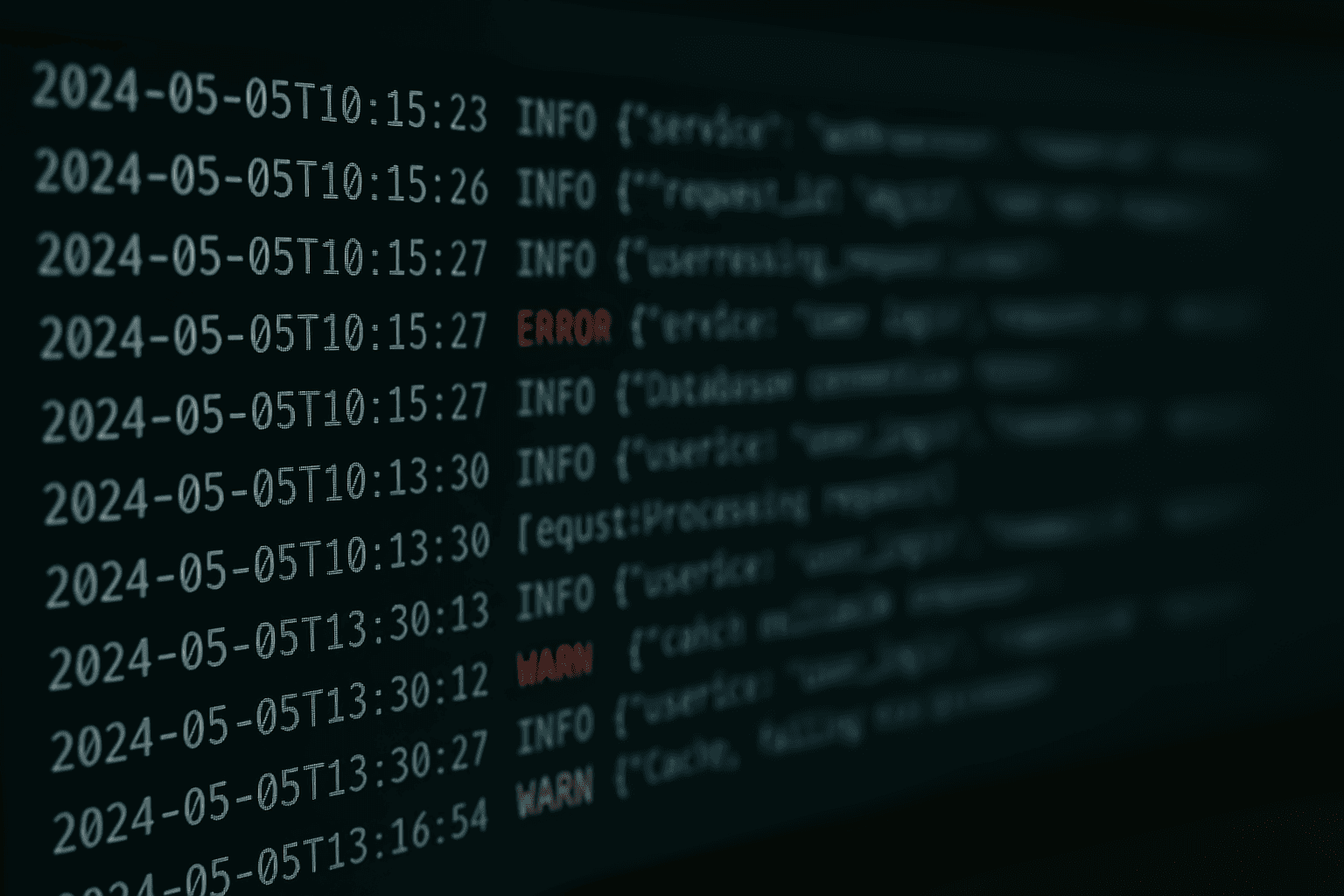
The result? Petabytes of logs are pumped out daily like an overeager data geyser. Most of it looks like:
INFO: Starting background sync job... (job_id: 32498a)
DEBUG: Finished background sync job... (job_id: 32498a, duration: 0.02s)
Oh geez, groundbreaking stuff. Really glad we archived that in six different AWS regions.
Meanwhile, the one thing you actually needed?
Unhandled exception in thread main_loop_37
Cause: Unknown. Location: Also unknown. Good luck.
You know, helpful.
Here’s the real kicker. Nobody reads logs during normal operation. Why would they? Everything is green, all metrics are up and to the right, and the DevOps Slack channel is silent (which, ironically, is a red flag). Logs are treated like black box recorders on a plane. Nobody checks them until we’re plummeting into the Atlantic.
Only then do we scramble, open up Kibana or Loki or whatever flavor-of-the-month log viewer, and desperately search for the one log line that explains what happened.
Logging gives us a false sense of control. Like a toddler with a toy steering wheel in the backseat. We think we’re preparing for the worst, but we’re just hoarding timestamped noise.
Log.Info(‘Step 1 complete’) – thanks, Sherlock.
Sometimes I wonder if logs are less about diagnostics and more about blame distribution. When the site goes down, someone has to say, "Well, my service logged the handoff. It’s the other guy's problem now."
Congratulations. You've built a denial-of-accountability system.
We throw around buzzwords like observability, telemetry, and real-time analytics. We collect logs, ship them to the cloud, let them rot in storage, and maybe set up a dashboard we check once a quarter when the intern needs something to do.
Yes, some teams do it right. They design structured logs. They use correlation IDs. They have real-time alerting pipelines. They even know what a span is. But let's not pretend this is the norm. Most organizations treat logs like old receipts. Useless until the IRS shows up.
Should we stop logging? No. But maybe log with intent. Less "just in case," more "what will actually help us at 3 AM when prod is on fire and someone is screaming at you."
Add context. Don’t log the same useless info every five milliseconds. And for the love of entropy, test your disaster response workflows. If you can’t find the bug during a simulated outage, you definitely won’t find it while the CEO is breathing down your neck asking why the homepage says "undefined."
Logs aren’t lies, but they aren’t truth either. They’re fragments of what happened, written by optimistic devs who assumed the system would fail gracefully. It won’t. It never does.
So the next time you add a new log line, ask yourself: "Will this help someone at 3 AM with coffee in one hand and fear in the other?" If not, maybe don’t.
Or just log it anyway. I’m sure someone will read it.
Eventually.